When the potato crop failed due to blight in 1846 it was obvious, in Ireland at any rate, that a major catastrophe was about to occur. The first failure in 1845 had been partial but it left the country debilitated with reserves run down, while individuals had few possessions left to sell or pawn.
Few Quakers in worst affected areas
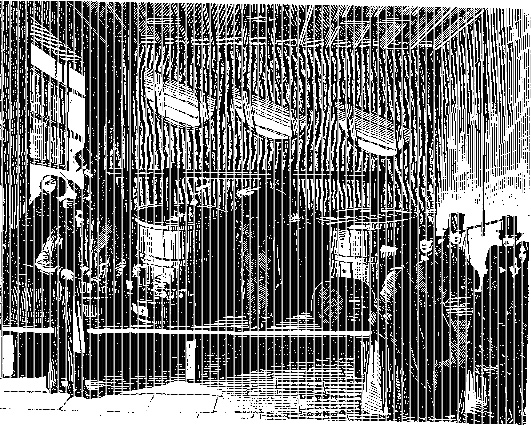 |
| A soup kitchen run by the Society of Friends in Cork, 1846-47 |
Members of the Society of Friends (Quakers) were amongst those who
understood the seriousness of the situation and many of them reacted by
setting up relief operations in their own areas. In the autumn of 1846
soup kitchens were set up by Quakers in towns such as Waterford,
Enniscorthy, Limerick, Clonmel and Youghal. Any thought of setting up a
more comprehensive relief programme was hampered by two drawbacks.
First, the number of Quakers in Ireland was small—a mere 3,000 or so out
of a population that exceeded eight million. Second, the Quaker
population was concentrated in certain areas and was almost entirely
absent from the west, including Donegal, Kerry, Clare, west Cork and the
whole of Connaught. Quaker relief, therefore, could not be offered
directly in the areas which would suffer most.

